























Frequently Asked Questions
Wall and ceiling panels
^ top ^- What is PVC?
Polyvinyl chloride (commonly abbreviated as PVC) is a widely-used plastic. Globally, over 50% of all PVC manufactured is used in construction. As a building material, PVC is budget-friendly and easy to assemble. In recent years, PVC has been replacing traditional building materials such as wood, concrete and clay in many areas.
^ top ^- What is PVC cladding?
PVC cladding was developed in Europe in the 1970s as a decorative interior wall finish with unique properties compared to other wall coverings at the time. PVC cladding or paneling is a hollow cored, lightweight panel with a smooth surface for decoration and a tongue-and-groove edge for easy assembly.
^ top ^- PVC wall panels are a new product to me or my country, so how can we I confident that there are no problems with it?
PVC wall cladding has first been used in Belgium, Holland and France for over 30 years. Since then, it has been gaining popularity in more and more countries. So our products have proven their reliability over the years. Many of our products have the necessary building certificates.
^ top ^- What sizes does the cladding come in? What designs?
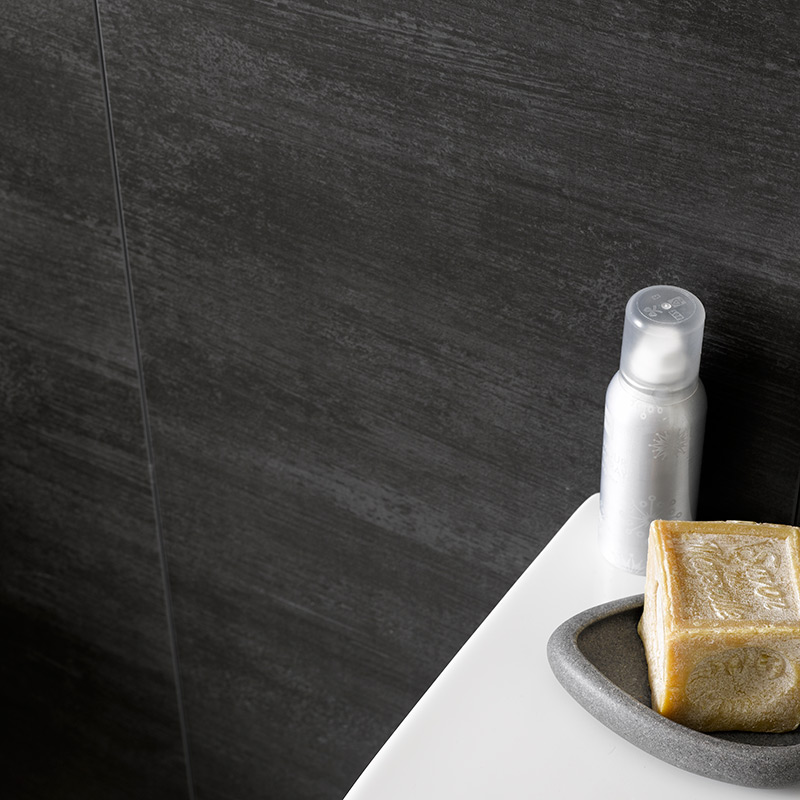
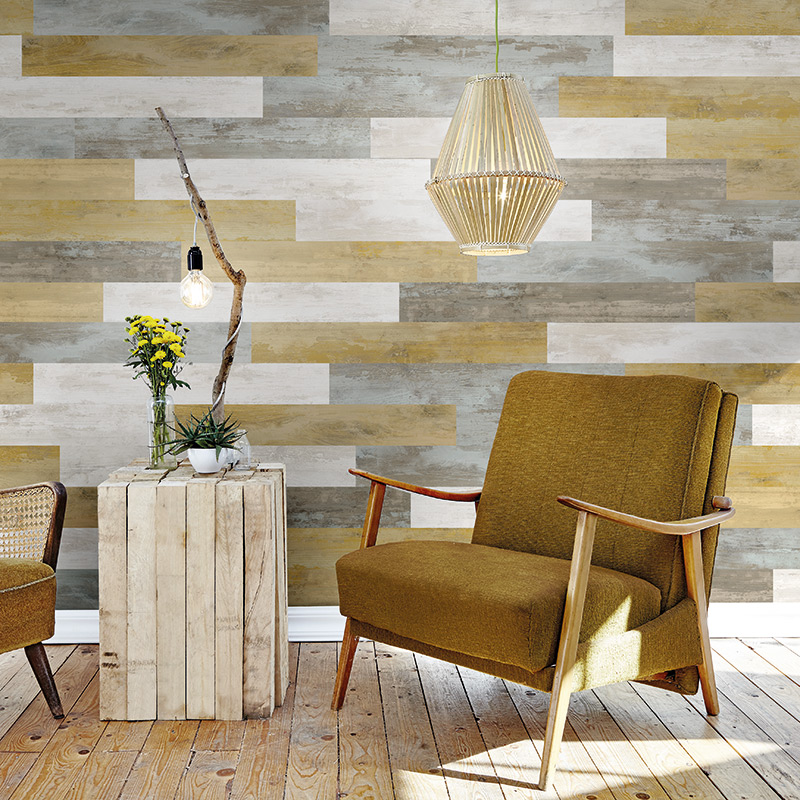
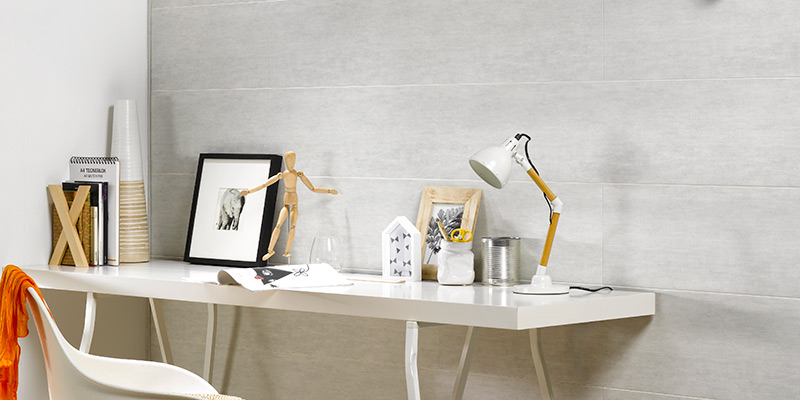
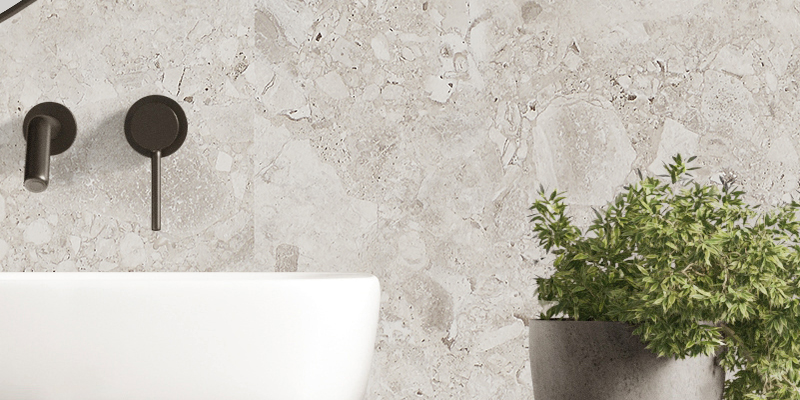
PVC cladding is available mainly in popular widths of 100mm and 250mm. We also produce in widths of 167mm, 375mm and 407mm (16" for the North-American market). The most common length is 2.6m (8ft for North America). Panel styles range from ‘seamless’ monopanels to V-groove panels (v-shaped joint). Many design patterns are possible including genuine wood grain patterns, marble and stone effects, and alternative fantasy designs.
Our standard product range is called Dumapan®
^ top ^- Do Dumaplast PVC panels have any insulating value?
Yes, Dumaplast panels have an insulating value of R 2.25 (0,16 watt/m°K), which is comparable to the insulating value of a normal house brick.
^ top ^- What is the maximum temperature for PVC panels?
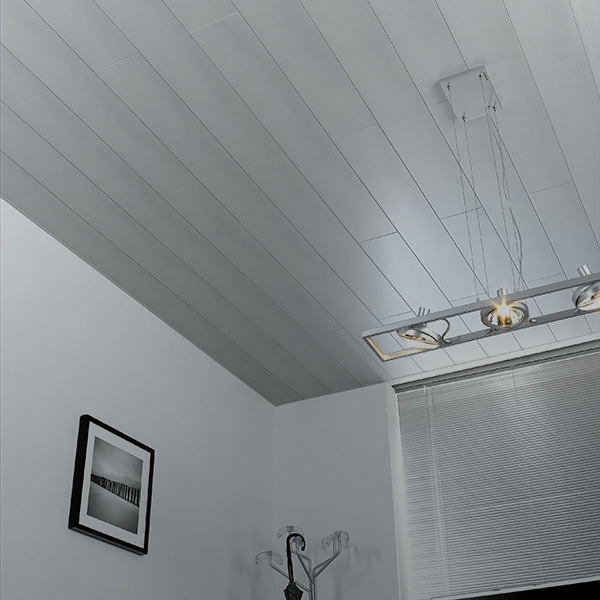
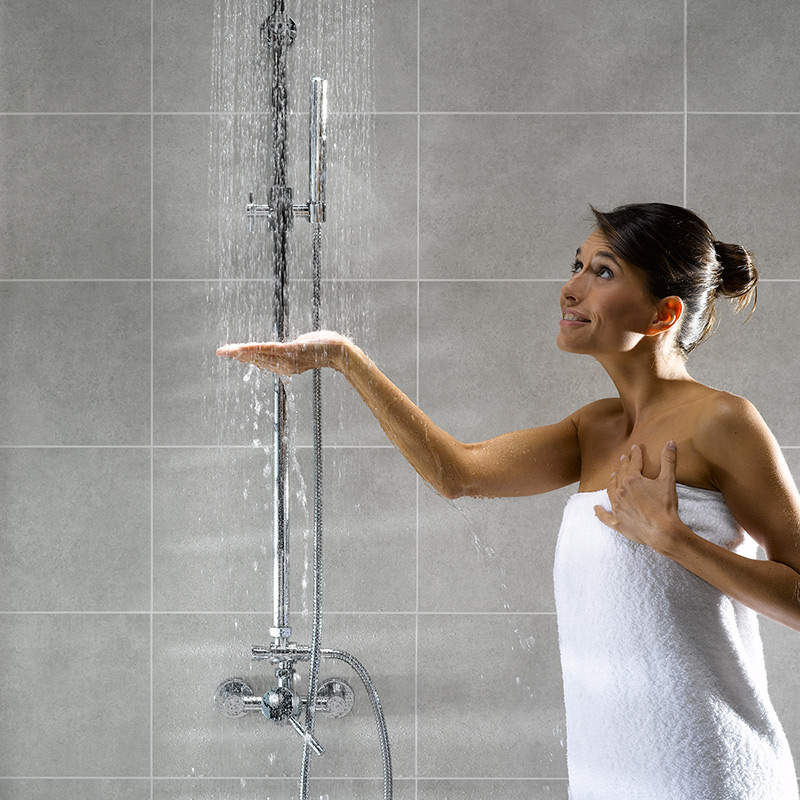
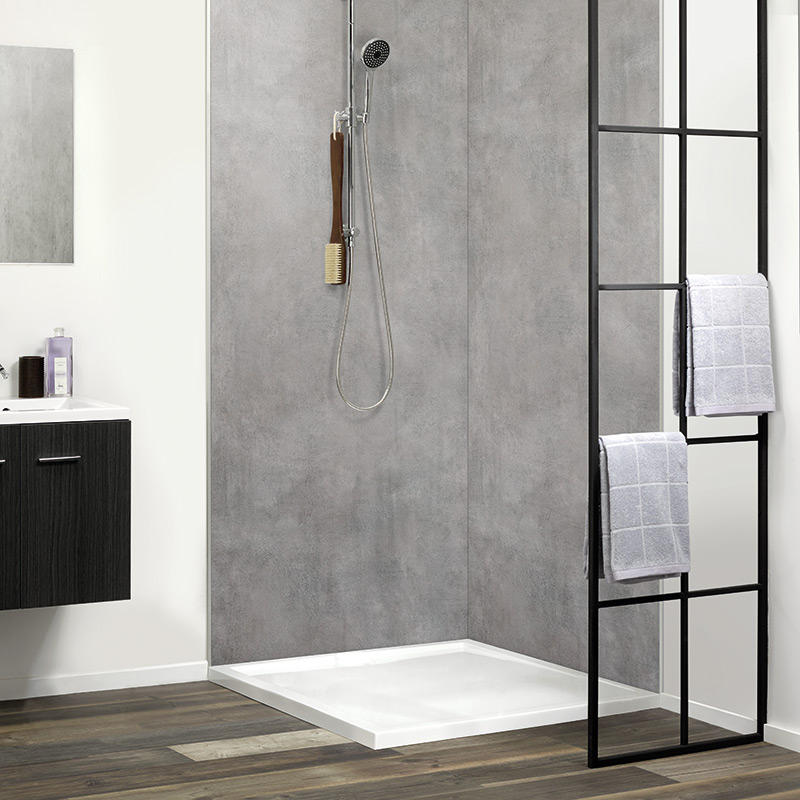
Our panels can withstand a maximum continuous temperature of 60°C. In this way, Dumaplast’s PVC panels can be used as a shower wall panel, but they cannot be used in saunas. Ceiling lights can be built in. When installing halogen lamps holes may be drilled in the panels.
- The contact temperature with the halogen spot may not exceed 60°C. Ensure that a space is always left of at least 10 mm between the halogen lamp and the panels to prevent distortion of the panel. The halogen spot must never be aimed at the panels
- Also pay attention that the light fittings conform to the legal regulations and that the fitting does not conduct the heat from the light bulb to prevent distortion to the panel.
^ top ^- What are the advantages of interior PVC wall and ceiling cladding?
- Easy and fast to install: PVC wall cladding is a very user-friendly product, to begin with. One can easily cut the panels to size and install them, making it the ideal DIY solution: fast and easy. Compared to tiles, they take about half the time to fit (no grout!). Since they are so easy to install, any DIYer can fit them, saving money on a fitter.
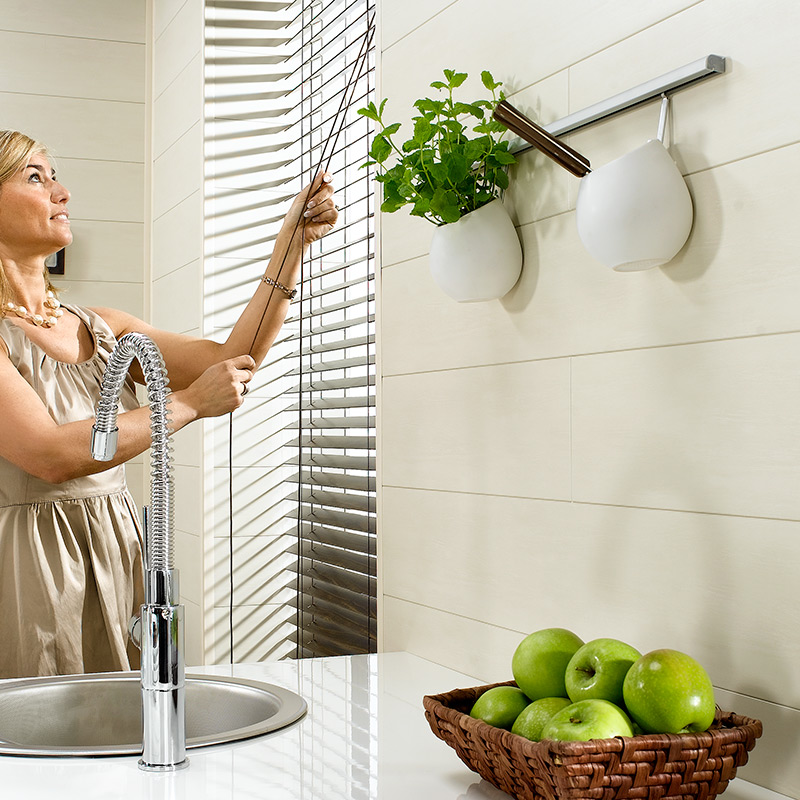
- Water resistant: PVC panels are very popular in the bathroom and kitchen areas as they are water-repellent and mould resistant, but they can be used all over the house (basements, attics, garages and also bed and living rooms).
- Budget-friendly: When compared to tiling, you save a lot of money on time and work when you are installing PVC panels to the wall. Most of the time, PVC wall panels are also price-wise more interesting if you look at the price per square meter.
- All-round and all-area product: Our panels are the ideal covering for walls and ceilings of private houses, offices, hotels, laboratories, hospitals, food processing plants, etc. The possibilities are endless: from the use as a decorative wall panel to a shower wall panel.
- Hygienic: Dumaplast panels provide a very clean and hygienic solution for wall and ceiling decoration. Once installed, there is no grout to go dirty. PVC is mould-repellent and not a suitable material for bacterial growth.
- Low maintenance: PVC panels require only a low maintenance, and when you want to clean them, it does not take you long. Due to the smooth surface of the panels, dirt does not gather in pores or cracks. A simple cloth will do to clean the surface. Do not use chlorinated or abrasive agents.
- Safe: PVC panels have a good reaction to fire and are classified as non-flammable products. PVC is self-extinguishable and does not burn by itself, once the “external flame” is withdrawn.
- Recycable: PVC is 100% recyclable. Our panels can be taken to any plastic recycling centre.
- Insulating: Dumaplast panels are insulating as well (R-value 2.25), which is an advantage when PVC panels are used in garages, basements or similar locations.
- No further finishing or care required after installation: no paint, no lack, no varnish,…
^ top ^^ top ^^ top ^- How do PVC panels compare price-wise to tiles?
Obviously, tiles come in all sizes and prices, but due to the fact that PVC panels take only about half the time to fit as tiles, you will save on installation costs. Whether you are employing a fitter, or doing it yourself, you will save money!
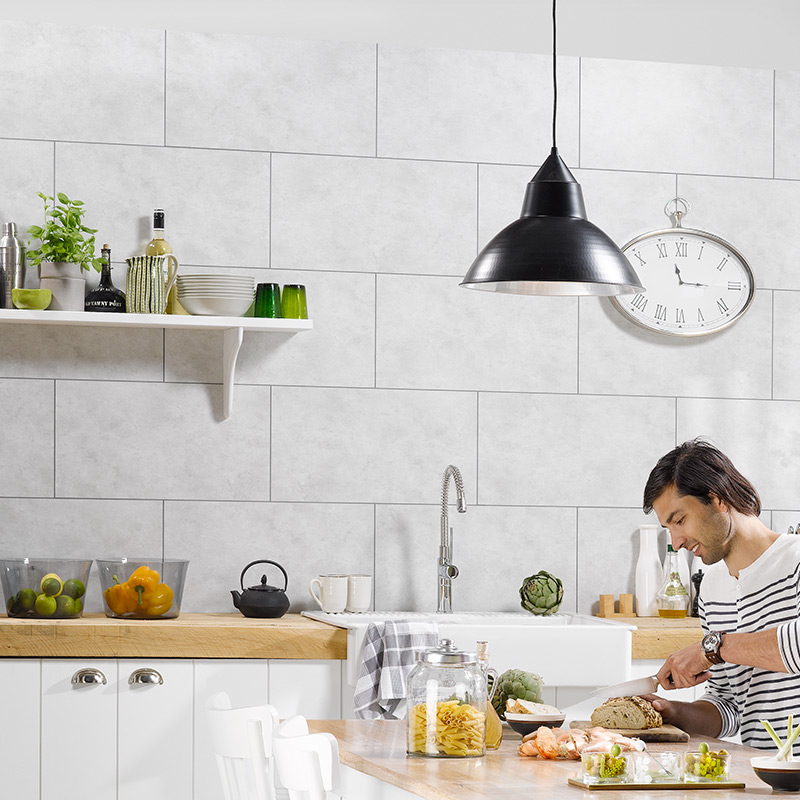
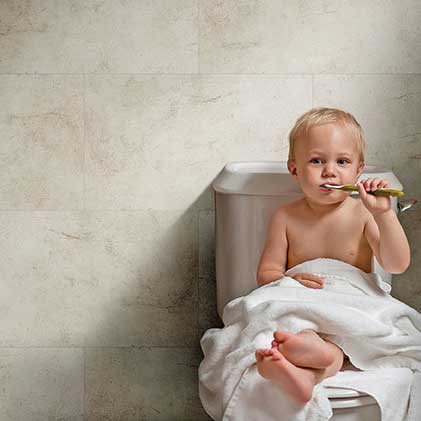
One of the main advantages of PVC wall cladding is that once installed, there is no grout to go dirty and maintenance is a thing of the past. For tile imitations our product Dumalock® is particularly suited!
^ top ^- What is the advantage of PVC wall cladding over wood paneling? Over tileboard? Over FRP panels?
PVC paneling is highly resistant to moisture and water. When compared to wood, Dumaplast PVC panels will not warp, delaminate or swell. PVC paneling is superior to wood paneling, tileboard or FRP panels because of the lower flammability. Dumaplast panels have a Class 1 fire rate as tested according to US STANDARD ASTM E84, Class 1 according to BRITISH STANDARD BS476-PART7-1997 and Class M1 according to FRENCH STANDARD NFP 92-501/504.
^ top ^- Is it easy to install Dumaplast products yourself?
Dumaplast panels are easy to install by the average DIYer. Panels can be cut by using a saw (manual or electric) or a sharp knife. Panels can be glued to smooth surfaces or can be attached to a framework of battens (40cm or 16inch apart) using nails, staples, screws or glue. More info on the installation page of our products.
^ top ^- What surfaces can the cladding be applied to?
Rough, uneven walls: Attach the panels to a built framework by nails, staples, screws or glue.
Smooth, even walls: simply glue the panels to the plaster or plaster board, or even to existing tiles!
^ top ^^ top ^- Do you need to put extra sealant in between the panels?
Normally not, but for installation in a shower room, around a bath or other very humid places a line of silicon must always be provided in the connection between the panels themselves and between the panels and support trims to ensure a completely waterproof joint. Also provide a silicon line between the panel and the edge of the shower or the bath. Dumaplast may only guarantee that the panels themselves are waterproof. The waterproof nature of each joint between and with the panels is the sole responsibility of the installer.
^ top ^- How do I cut Dumaplast PVC panels?
Dumaplast PCV panels can be easily cut or trimmed using a hand saw, table saw, portable circular saw, sabre saw or sharp utility knife.
Caution – take appropriate precautions when using any cutting tools.
^ top ^^ top ^^ top ^- How do I clean and maintain my Dumaplast panels?
Use ordinary household products for maintenance. You can polish the panels to their original condition using a soft, non-abrasive cleaning agent. Usually you only need a damp cloth to clean the panels thoroughly. Do not use abrasive, aggressive substances or cleaning products based on chloride. Solvents should also not be used. Adhesive residue or pen marks are best removed using isopropyl-alcohol.
^ top ^^ top ^- Can I install PVC panels to the ceiling of my swimming pool?
Our PVC panels will have enough chemical resistance for an indoor swimming pool. The maximum allowed concentration level of chlorine around swimming pools lies around a couple of milligram per cubic meter of air, and this would not have an effect on the PVC panels.
The successful use of PVC for drainage of waste water and for floor covering also shows that PVC has a high chemical resistance.